Posted on

Hale & Hearty Honey

If you’ve lived on planet Earth for more than six months, you’ve heard of honey. But, what do you really know about honey? Probably that Winnie the Pooh is addicted and it pairs well with nut Cheerios. There’s a reason this post is titled, Hale & Hearty Honey.

Honey is the epitome of a superfood. You might want to add honey to your daily diet.

‘Hale’ to the Honey

This pure substance is the only food that contains all the necessary ingredients to sustain life. The vitamins, enzymes, and minerals found in honey are all the necessary ingredients to keep us alive and healthy. I repeat, Hale & Hearty Honey!

What’s more, it’ll never spoil.

The biggest amount of antioxidants is found in darker honey. Antioxidants can prevent arteries from narrowing which means a stronger heart. Enjoying honey on the regular can fight excess cholesterol. This is because of the beneficial effect it has on the level of antioxidants compounds in the body.

Speaking of cholesterol, you won’t find any in honey. But you’ll find constituent components and vitamins that help purge the bad cholesterol. Honey can help restore the cellular antioxidant defense system. Consequently, this improves memory. And, it’s worth mentioning that the calcium in honey is easily digested by the brain.

Doesn’t Sugary Stuff Give You Acne?

Yeah, about that. We avoid too many sugary products because of the negative effects on the skin. However, honey isn’t your typical sweetener. We’re talking about a different composition of sugar, not oily skin kind. Sweet! (see what I did there?)

Honey is an excellent antioxidant so regular consumption will cleanse the body of toxins. Also, its antibacterial properties will considerably improve the condition of your skin. Honey is used as a DIY moisturizer, light scrub, and pore cleanser.

There are countless ways to combine honey and natural products for skin care. These easy mixes cleanse, exfoliate, and hydrate. A huge bonus is their antifungal, antibacterial, and anti-inflammatory properties. Try it for yourself:

Read how amazing Bees are!

There’s a magick quality between honey and air. It absorbs moisture and transfers it to the skin. So your face receives the hydration that lasts longer and stays in the layers of skin where its most needed.

What Else?

Honey is so much cooler than all that. We’re supposed to cut sweets out of our diet to lose weight, right? Not honey. Matter of fact, adding it helps us lose weight by boosting the metabolism. It also gives minerals and vitamins beneficial for the body we may lose on a diet.

The sugar in honey isn’t empty calories. It’s fiber, protein, and water. Add this to your day and notice your energy level change:

Seriously, read about the bees!

Do yourself a favor and experience the amazing benefits of honey. But, don’t stop there. Mother Gaia’s nature kingdom is full of magical health benefits. Go explore. Bee Amazed.

Get a Taste of Honey!

Queen V

Posted on

The Absentee of the Bee

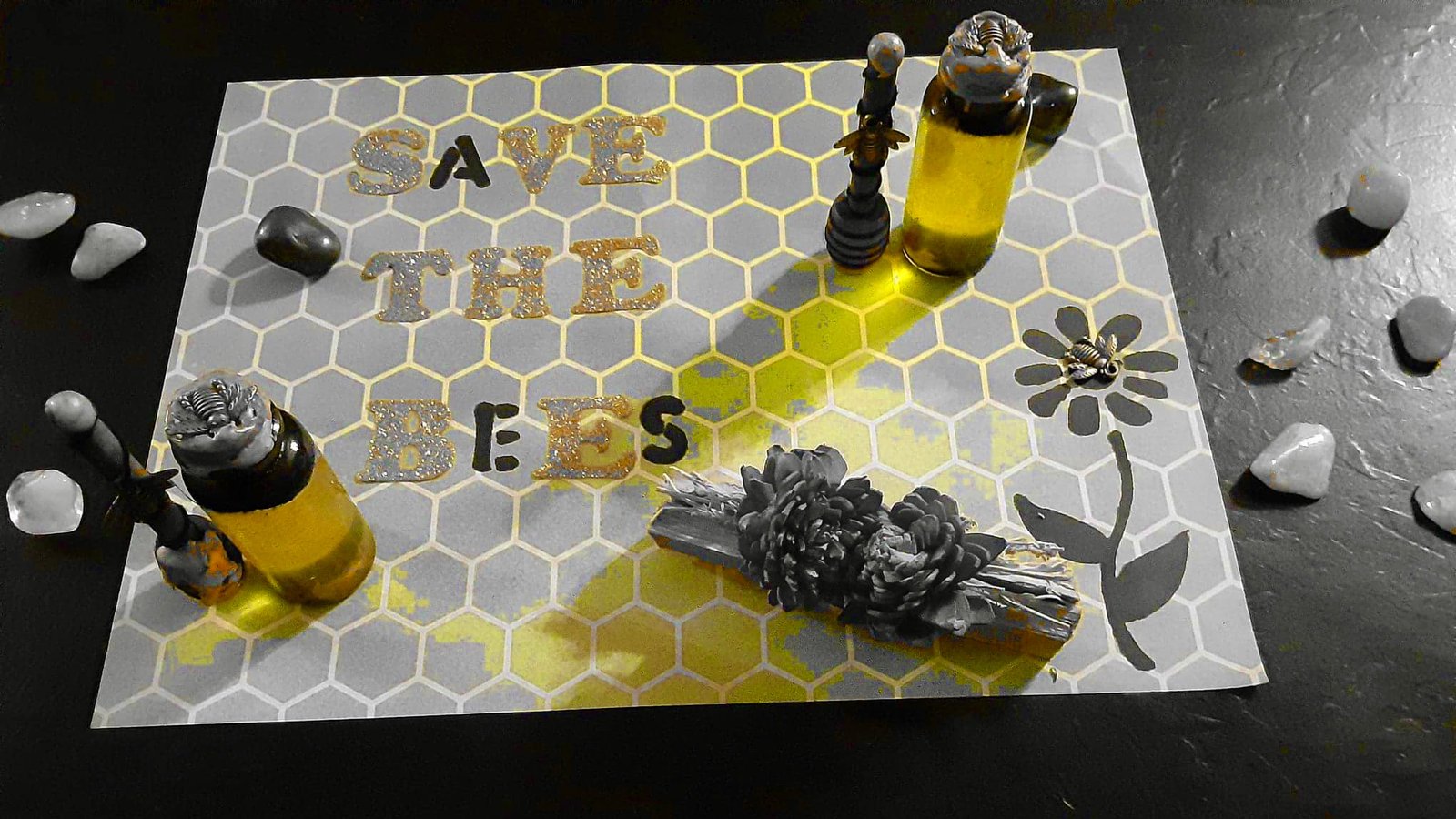
Save the Bees sign with a Bee Still Zen Bottle

The bee definitely stands out amongst the pollinators of the world – butterflies, hummingbirds, and bats. Their vital role in the ecosystem is highly taken for granted. A direct result of their labor is highlighted in every third bite of our food. The hard work of the bee is actually the key to our existence.

While providing food security, their pollination also globally supports the food economy with a value of $500 billion annually.

Too many humans aren’t concerned with the bee population rate. Since the late 1990’s, the bee population has declined. As of 2006, around 40% of honeybees have mysteriously disappeared.

Where Have all the Honeybees Gone?

Pesticide/Insecticide/Herbicide

Bees can ingest any pest management interventions from our gardens. Neonicotinoids are a class of neuro-active insecticides that are chemically similar to nicotine. Research has found that neomics have several negative influences on bee populations. Some places in Europe and some provinces in Canada have already banned the usage of neonics. Research shows that using insecticides containing neonics is the leading cause of the massive bee die-off.

Certain insecticides, pesticides, and herbicides affect the immune system of bees, making them more prone to mites and viruses. The sick honeybees spread diseases throughout the colony. The chemicals also damage their ability to navigate and reproduce. This disorientation can also alter their scent causing rejection from the colony.

Climate Changes

The inconsistent shift in temperature confuses bees during the changing seasons. They aren’t sure where they’re supposed to be or at what time. Their food sources are being missed and trees aren’t being pollinated.

Some species adjust to the weather changes, but not all can. Adding to the turmoil, certain trees have begun to blossom at different times than bee activity.

Varroa Mites

Mites called Varroa destructor are infesting colonies. The mites leave open wounds, spread viruses, and deform the babies.

Cellular Towers Conjecture

Bees use the Earth’s electromagnetism for navigation. The radiation that the cellular towers emit interfere with this field. The concern was that the increase in the atmospheric electromagnetic radiation has been influencing the way the bees navigate.

However, recent studies concluded that the claim of cellular towers being responsible for the decline of bees, do not sufficiently meet the scientific requirements to announce such a claim.

Biodiversity Complications

The loss of biodiversity due to commercial developments leave the bees without homes. Urban city structures are always being assembled resulting in habitat loss for the bees.

This also means a lack of diverse food sources. Limited forage spaces trigger a war between colonies, with the queens fighting till death. Our bees are suffering from poor nutrition and stressful environments.

Collective Humanity Support

It’s understood that many of us don’t possess philanthropist means or even a desire to build a bee sanctuary like the meritorious Morgan Freeman. Adding beekeeper to his curriculum vitae, this badass shining star simply provides a safe environment for 26 hives to live and pollinate, with no intention of harvesting honey for profit at his home.

But for the rest of us, the fact remains that the alarming rate of the disappearance of the bees should be a collective concern. Small, reasonable steps to help the bees thrive are available to us, without altering our lives:

  • Eliminate harmful pest management practices
  • Plant bee-friendly flowers
  • Spread the word
  • Learn beekeeping
  • Alter beekeeping practices
  • Build a bee hotel
  • Make a bee bath
  • Plant an herb garden

Harsh pesticides can kill off the beneficial insects necessary for a healthy ecosystem. Abundant microbes, fungi, and the soil is also the target for flourishing gardens so introducing effective pesticides to rid harmful critters without poisoning anything else is ideal.

Alternate solutions can be achieved through natural and homemade insecticides/pesticides. Essential oils have proved to be effective in keeping predatory insects away and some beekeepers are using essential oils for the treatment of mites.

Wind and water are the pollinators responsible for some flowering plants, but around 3/4 are reliant on insects. Help from any pollination source is useful, including the solitary bees. We could help by planting bee-friendly flowers or simply leaving flowering weeds like clovers, milkweed, and chickweed for food sources. Helping bees by planting chives, fennel, or oregano is a win-win situation. Those are just a few of herbs that bees are keen on and we could find a use for in our kitchens.

Ideas for do-it-yourself bee baths and bee hotels can be found all over the internet, especially Pinterest. I have a board committed to the greater benefit of the bee below. This link will show many ideas and how-tos for anyone interested in transforming their backyards, or simply a small portion of, into bee-friendly zones.

Law of Magnetism

Most of us are aware of the Law of Attraction and how using a vision board can manifest our desires.

Creative visualization is also therapeutic, pleasurable stimuli reduces stress, and mirrors the spiritual health and wellness of meditation.

An alternative to the dry landscape garden of serene, calming activity is the Bee Still bottle. The bottle contains water and MICR (magnetic ink character recognition) toner. By using the magnet to move around the shards of toner we are able to see the magnetic field which is almost hypnotizing.

Taking the initiative to Be Still reflects the mental and psychological merits of a Zen Garden. The essence of the magnetic vial is serene and mesmerizing. A magnetic honey dipper attracts magnetic ink mimicking attracting the bees back to healthy environments.

Pollinators, Mount Up!

Pollination is the highest contributor, outweighing all other agricultural management practices. 87% of our food crops rely on pollinators world-wide. The risk isn’t strictly for the commercial honeybees, but the native bees as well.

We always say doing the best for our children is our number one priority. We can prove this statement by maintaining biodiversity and pitching in to help the bees.

Highbrations!

Victoria 🐝

Posted on

Bee-FF

Our friends have qualities in which we enjoy their company. Friends are encouraging, they help us overcome challenges and they care for our well being. Spirit animals do all of those things and are quite interesting. The bee spirit symbolizes personal power and nature, as in creating life.

The most common message we learn from the bee is about productivity. Bee’s have mastered balance in this area. A bee’s work ethic is very strong, but they also know to take time to play and to stop and smell the roses. The bee spirit can teach us a lot about working in groups, our social nature, and the community.

Symbolic Value of Providence

The Bee has a major part to play in the on-going life cycle of our crops. Einstein taught us the importance of bees to the ecosystem. He predicted that if they disappeared, the human race would only survive for four years. One out of every four bites of food we indulge in is thanks to the bee’s pollination.

Out of 20,000 species of bees, the world depends primarily on the Honey Bee. They go from flower to flower pollinating to enrich the world with crops. The Bee also provides us with wax, honey, and pollinate the alfalfa seeds used for beef and dairy feed. Honey is delicious on almost anything, and it never expires. Honey also has medicinal and antibacterial uses.

Bees provide the only food we eat from an insect – honey. The Honey Bee is highly intelligent. They don’t build their waste-room inside the comb for the risk of contaminating their food or infecting their offspring. They even produce an antibiotic substance called propolis. This sticky plant resin sterilizes the hive and shields against diseases and infections. The propolis also prevents the spread of bacteria, fungi, and viruses.

The Bee Knows No Limits

When facing impossible odds, the bee is a great friend to turn to. A widely debated myth saying aerodynamically, bees should not be able to fly has been discredited. Numerous facts about the bee were not considered in the original calculations that created the rumor. Scientists, engineers, and entomologists have debunked the myth but also shown that the bee is even more astounding.

The illusion is in the speed at which bees are able to beat their wings – 200 times a second! This creates complex patterns of vortices and amplifies the force of movement through the air. Super impressive.

It’s said that bumblebees don’t fly, they do what’s called an acoustic levitation. They have a hollow cavity next to the larynx, and when they beat their wings they resonate with the energy of the cavity. When they match 7.83Hz of mother earth’s magnetic field, they become surrounded in an electromagnetic field, which enables levitation.

The Chinese bumblebee amazed researchers when they discovered that even in air pressure low enough to suffocate most other animals, the bee is still capable of flight. Altering the angular velocity of their wings, bees increased their amplitude of wing stroke that compensated for the thin air.

The bee is a master of miracles as they seem to always find an elusive solution.

Divine Messenger

The bee has a theme of life. The bee’s work of pollinating the land for crops to grow can be compared to divine work. Most monasteries keep beehives fort their gardens, and to produce honey to sell to visitors. A monastery’s structure is similar to the structure of a hive, wherein it’s a community that works together.

The Bible references to honey comparing it with purity and abundance. In the Gospel of Luke, after Jesus’ resurrection, his disciples gave him fish and a honeycomb to eat. The Promised Land for the Israelites is described in Exodus 3:17 as “a land flowing with milk and honey.”

Bee Spirit is very helpful when you’re working with solar magic, particularly sun Goddesses. She also supports success when it feels like you’ve reached a standstill in a project or goal.

The Honeycomb Conjecture

“…that vast book which stands forever opened before our eyes, I mean the universe, … cannot be read until we have learned the language… It is written in mathematical language, … without which… it is humanly impossible to comprehend a single word.”

Galileo, the Father of Modern Science

Honeybees are nature’s mathematicians. Using their intelligence, they calculate angles and the roundness of the earth to design their hives. They are made from beeswax in tightly packed cells forming a hexagon called a honeycomb. A hexagon is made up of six sides, which are symbolic of communication, union, balance, and love.

Bees chose a geometrical shape that is economical for the storage of honey with the least amount of wax. Hexagons have advantages over other shapes, one being its the strongest. The pattern is so strong that less material is needed to support the weight in the thin walls. Bees make the walls of the cells 3k times thinner than a sheet of paper.

The polariscope pattern by a structural engineer is calculated by much mathematics. It’s so complex that only a computer can actually calculate it.

Bees love to Dance

Bees don’t calculate all the possibilities for the shortest route, they can detect ultraviolet and polarized light from the sun. Their eyes are a solar compass that determines the precise location at any time. Their internal clock estimates the sun’s new position throughout the day.

They use their solar compass and internal clock while they do the waggle dance. This dance tells workers what angle to travel away from the sun for food.

Through the dance, they relay information about the distance to a source of food. When they dance longer, the food is further away, and vice versa in shorter durations. The more excited they appear, the greater the source of the food will be.

Bees are our Best Friends

“If the bee disappeared off the surface of the globe, then man would have only four years of life left. No more bees, no more pollination, no more plants, no more animals, no more man.”

Albert Einstein

With a myriad of more unique, amazing qualities not mentioned here, the bee is a divine gift. In the bee we may see an unlikely small insect, however, a large symbolic lesson is there.

Our ecosystem depends on the vital role of the bees pollinating plants. Nearly 90% of the world’s flowering plants depend on the pollinators to reproduce. One-third of everything Americans eat comes from their busy hard work. Without pollination, the food plants can’t make seeds.

Due to poor beekeeping practices, decreasing crop diversity, pesticides, human activity, and climate change, the numbers of the bees are declining.

All of the earth community including all the beings, have fundamental rights including the right to exist, the right to have a habitat, and the right to participate in the evolution of earth. We wrongly believe that our mastery of human rights cancel out the right of the other beings to exist.

To create a future for the benefit of the whole is of the essence. Protecting the sweetly divine honeybee by way of action can influence others to follow suit. There are resources available for citizen action include learning about beekeeping, getting involved politically, and joining groups that offer opportunities to provide our pollinators with a safe environment.

Highbrations!

Victoria ☯︎